
Forefoot Neuromas in Laval | Morton's Neuroma and Intermetatarsal Bursitis
Symptoms
- ✓Sharp pain or burning in the forefoot
- ✓Sensation of pebble or fold under the foot
- ✓Numbness or tingling in the toes
- ✓Increased pain when walking or wearing narrow shoes
- ✓Temporary relief when removing the shoe
Treatments
- ✓Custom foot orthotics
- ✓Shoe modifications
- ✓PRP (platelet-rich plasma)
- ✓Hyaluronic acid
- ✓Alcohol sclerosing injection
- ✓Surgery (last resort)
Introduction
Forefoot neuromas and intermetatarsal bursitis are common causes of pain, burning or numbness between the toes. These conditions can present with similar symptoms and are sometimes confused.
At Clinique podiatrique de l'Avenir, podiatrists in Laval evaluate and manage nerve and inflammatory forefoot pain, within the scope of practice recognized in Quebec, using a progressive and individualized approach.
What Is a Forefoot Neuroma?
A neuroma is irritation or thickening of a nerve, generally caused by repeated mechanical compression.
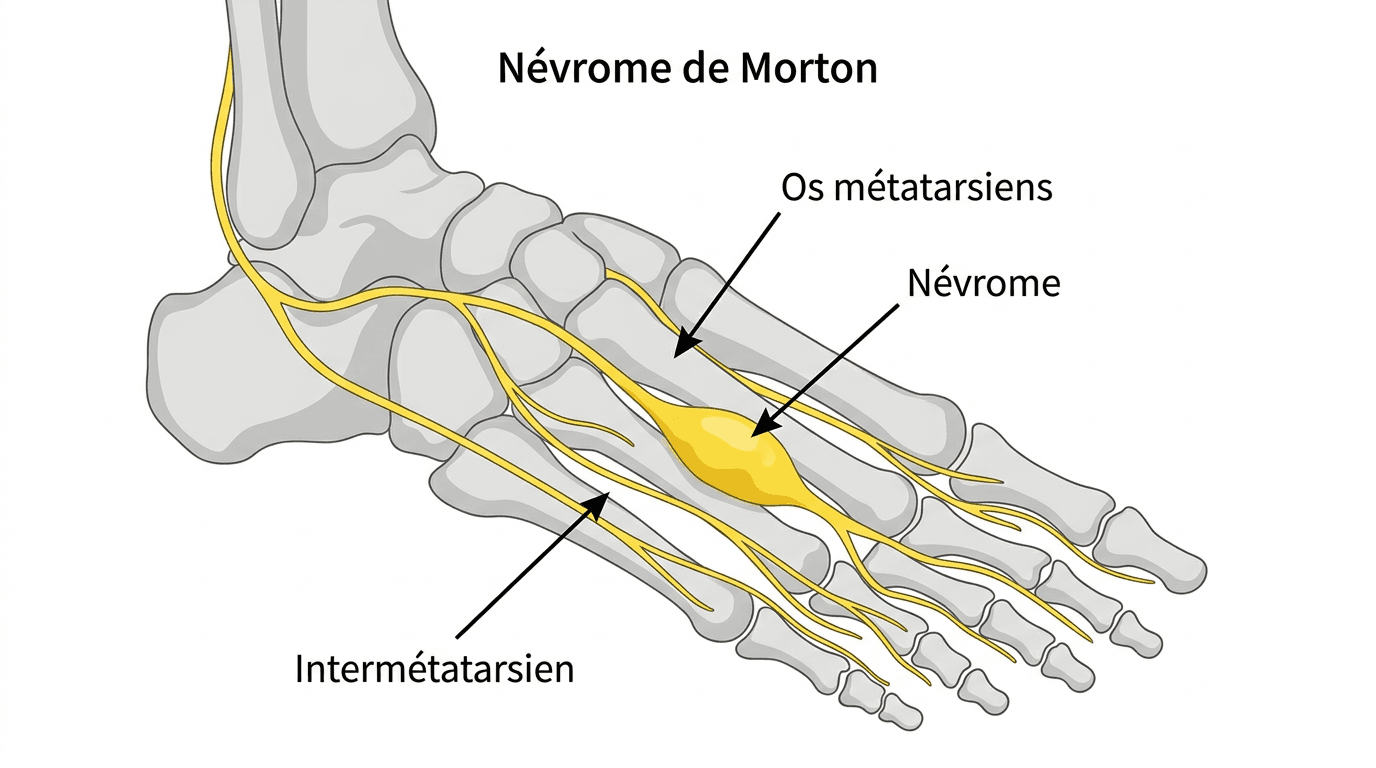
In the forefoot, neuromas mainly affect the interdigital nerves located between the metatarsals.
Morton's Neuroma
Definition
Morton's neuroma is the most common forefoot neuroma.
It most often affects:
- The space between the 3rd and 4th toes
- Less commonly between the 2nd and 3rd toes
It is not a cancerous tumor, but a functional nerve condition.
Common Symptoms
- Sharp pain or burning in the forefoot
- Sensation of a pebble or fold under the foot
- Numbness or tingling in the toes
- Increased pain when walking or wearing narrow shoes
- Temporary relief when removing the shoe
Contributing Factors
Clinical findings associate Morton's neuroma with:
- Repeated compression of intermetatarsal spaces
- Associated metatarsalgia
- Biomechanical imbalances of the foot
- Narrow or high-heeled shoes
- Impact sports activities
Intermetatarsal Bursitis
What Is Intermetatarsal Bursitis?
Intermetatarsal bursitis is inflammation of a bursa located between the metatarsal heads. That bursa normally helps reduce friction between structures.
It can cause symptoms very similar to those of a neuroma.
Possible Symptoms
- Localized pain between two metatarsals
- Sensitivity to plantar or dorsal pressure
- Increased pain when walking
- Sensation of swelling or pressure
Unlike a neuroma, neurological symptoms (numbness, electric shocks) are generally less marked or absent.
Contributing Factors
- Repeated mechanical overload
- Chronic metatarsalgia
- Inadequate footwear
- Forefoot deformities
Neuroma vs Intermetatarsal Bursitis: How to Tell Them Apart?
A podiatric evaluation is essential for an accurate diagnosis.
Differential Diagnosis
Pain between the toes may also be related to:
- Mechanical metatarsalgia
- Plantar plate injury
- Capsulitis
- Metatarsophalangeal arthropathies
- Sesamoiditis
Podiatric Evaluation
Evaluation includes:
- Targeted clinical examination of the forefoot
- Palpation of the intermetatarsal spaces
- Biomechanical analysis
- Gait observation
- Shoe evaluation
On-Site Diagnostic Tools
Diagnostic Musculoskeletal Ultrasound
When clinically indicated, ultrasound can:
- Visualize nerve thickening compatible with a neuroma
- Identify intermetatarsal bursitis
- Support differential diagnosis
Conventional Radiology
X-rays may be used to:
- Rule out bony causes
- Complement the clinical evaluation
Management Options
Management follows a progressive approach tailored to the identified condition.
Conservative Approaches (First Step)
- Custom foot orthotics aimed at reducing intermetatarsal pressure
- Shoe modifications (width, cushioning)
- Activity and load adjustment
- Personalized clinical advice
Complementary options such as hyaluronic acid or PRP may also be discussed depending on the clinical presentation.
Advanced Therapeutic Modalities
When symptoms persist despite well-conducted conservative care:
- PRP (platelet-rich plasma), in certain targeted situations
- Hyaluronic acid, when clinically relevant — For more on hyaluronic acid in podiatry, see our hyaluronic acid service page.
- Alcohol sclerosing injection, in selected cases of documented neuropathic forefoot pain
Hyaluronic Acid (Complementary Approach)
Based on podiatric evaluation and clinical presentation, hyaluronic acid may be considered as a complementary approach for certain forefoot pains, especially when well-conducted conservative treatments have not provided sufficient relief.
Morton's Neuroma
In certain targeted situations, hyaluronic acid may be used to:
- Help reduce local friction around the interdigital nerve
- Improve walking comfort
- Support functional tolerance of the forefoot
This approach is discussed on a case-by-case basis and does not replace biomechanical assessment or custom orthotics when indicated.
Intermetatarsal Bursitis
In certain persistent mechanical bursitis cases, hyaluronic acid may be considered to:
- Support the environment of irritated soft tissues
- Help relieve weight-bearing pain
- Complement an overall conservative strategy
The goal is symptom relief and functional improvement, without claiming to correct the underlying cause.
Alcohol Sclerosing Injection (Targeted Approach)
Alcohol sclerosing injection: A diluted alcohol solution injected around the nerve to selectively damage the painful nerve fibers, reducing their ability to transmit pain.
Based on podiatric evaluation and clinical presentation, alcohol sclerosing injection may be considered as a targeted approach for certain nerve-related forefoot pains, especially when well-conducted conservative treatments have not provided sufficient relief.
This approach is discussed on a case-by-case basis, within a strictly framed clinical setting.
When It May Be Considered
Alcohol sclerosing injection may be discussed when:
- Morton's neuroma is well documented clinically (and, when indicated, supported by imaging)
- Orthotics, shoe changes and load modification have been tried
- Pain remains limiting for walking, work or sports
- A non-surgical option is preferred before considering surgery
Goals for Morton's Neuroma
In selected clinical situations, alcohol sclerosing injection may be used to:
- Reduce painful transmission of the interdigital nerve
- Help relieve interdigital pain
- Improve functional walking comfort
This option is generally considered before a surgical approach when the condition is well documented and persistent.
What to Expect
- The injection is performed in clinic after clinical localization of the affected interdigital space
- A series of sessions may be proposed when clinically appropriate; the plan is individualized
- Temporary local discomfort after the injection is possible
- Follow-up assesses response and whether to continue, adjust or change strategy
Framework and Limits
- Alcohol sclerosing injection is not a guaranteed curative treatment
- Results may vary from one patient to another
- Rigorous patient selection is essential
- It does not replace biomechanical evaluation, orthotics or load modification
- Potential benefits, limits and alternatives are reviewed before any decision
To learn more about injectable options (alcohol sclerosing injection, hyaluronic acid, PRP), see our Morton's Neuroma — Injectable Options page.
Surgery (Last Resort)
In cases of persistent and disabling pain despite failure of conservative and advanced treatments, a surgical option may be discussed as a last resort after a complete evaluation.
When to Consult?
It is recommended to consult if:
- Pain between the toes persists
- Numbness appears
- Pain limits walking or sports
- Shoes become difficult to tolerate
Forefoot Neuromas and Intermetatarsal Bursitis in Laval – Book an Appointment
Are you experiencing pain, burning or numbness in the forefoot in Laval?
Book an appointment with a podiatrist at Clinique podiatrique de l'Avenir for a complete evaluation and care in accordance with current standards.
Frequently Asked Questions
What is Morton's neuroma?
Morton's neuroma is irritation or thickening of an interdigital nerve, most often between the 3rd and 4th toes. It is not a cancerous tumor but a functional nerve condition caused by repeated mechanical compression.
Neuroma or intermetatarsal bursitis?
Both conditions can cause similar symptoms. Bursitis is inflammation of a bursa between the metatarsals. A podiatric evaluation is essential for an accurate diagnosis.
What is alcohol sclerosing injection?
A diluted alcohol solution injected around the nerve to selectively damage the painful nerve fibers, reducing their ability to transmit pain. This option is generally considered before surgery when the neuroma is well documented and conservative care has not been enough.
When to consult?
Consult if pain between the toes persists, if numbness appears, if pain limits walking or sports, or if shoes become difficult to tolerate.
This content is for informational purposes and does not replace a professional consultation.